Long before there was a ranch, there was the river.
The valley
The ranch sits on the floor of the North Platte River valley. Over a very long time the river cut down through an old plateau of clay, sandstone and volcanic ash, and left the bluffs that stand on both sides of it today. To the south are Courthouse and Jail Rocks, Chimney Rock and the Wildcat Hills. On the north side, at Broadwater, is the formation the National Park Service lists as Ancient Bluff Ruins. Fossils of an ancient elephant relative, the stegomastodon, found near Broadwater are on display at Morrill Hall in Lincoln.
The first people
For generations before settlement, this was hunting and travel country for the Lakota, Cheyenne and Arapaho, and the Pawnee hunted bison along Pumpkin Creek to the south. The 1868 Treaty of Fort Laramie and the war of 1876–77 ended Lakota control of the Panhandle, and the grass that had fed the bison opened to cattle.
The trail on our side of the river
The Oregon and California trails ran along the south bank of the North Platte. The Mormon Trail ran along the north bank, the same side as the ranch and today's Highway 26. On May 23, 1847, Brigham Young's pioneer company climbed Ancient Bluff Ruins near present-day Broadwater and carved their names on a buffalo skull at the top. In 1860 and 1861 the Pony Express, and then the telegraph, came through Mud Springs Station near Dalton, where the Battle of Mud Springs was fought in February 1865.
Open range to homestead
In 1888 and 1889, big cattle outfits ran their herds across the open range that would become Morrill County. That changed with the Kinkaid Act of 1904, which let settlers claim 640 acres in the Panhandle, four times the old 160-acre homestead. Settlers poured in from 1907. Morrill County was created in 1908 and organized in 1909, and Broadwater was incorporated the same year, when the railroad arrived.
Water made the valley. Settlers dug ditch companies off the river, and the federal North Platte Project brought Pathfinder Dam in 1909. Decades later, center-pivot irrigation, invented in Nebraska by Frank Zybach in 1952, changed the fields again.
ZT and Fern
Into that new country came Zoma Thomason McManis, known to most folks as ZT. He started the family homestead near Broadwater in the early 1900s. Fern Wilkenson's family came to Broadwater from Battle Creek in 1910, within a year of the town's founding. Fern went to college at York and Scottsbluff, and in 1920 she and ZT married. Fern lived until 1987 and is buried at Rose Hill Cemetery in Broadwater.
Mick and Pauline
ZT and Fern's daughter Pauline married Matthew "Mick" Cunningham, and the two of them ran the family ranch in rural Broadwater. Their four children grew up on the ranch.
Cunningham Cattle Co.
In the early 1980s the ranch built a sale ring, feedlot pens, a scale and a Morton building. On October 17, 1985, the family incorporated Cunningham Cattle, Inc. Gelbvieh cattle had only reached the United States in 1971, and by January 1987 Cunningham Cattle Co. was advertising a Gelbvieh bull, female and steer sale at the ranch on West Highway 26.
Gelbvieh Bull, Female & Steer sale … at the ranch, Cunningham Cattle Co., West Hwy 26, BroadwaterSale notice, Daily Nebraskan, January 1987
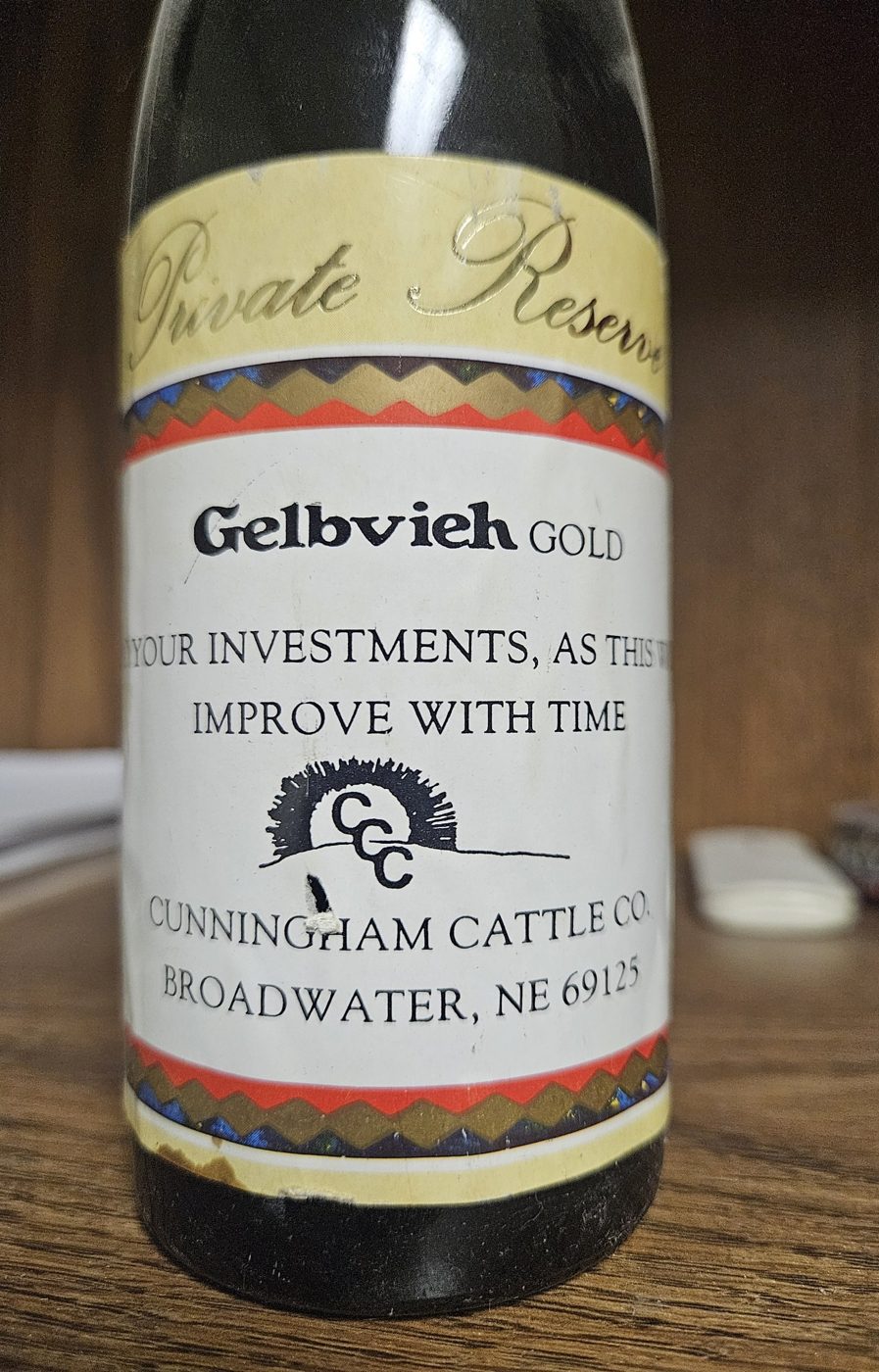
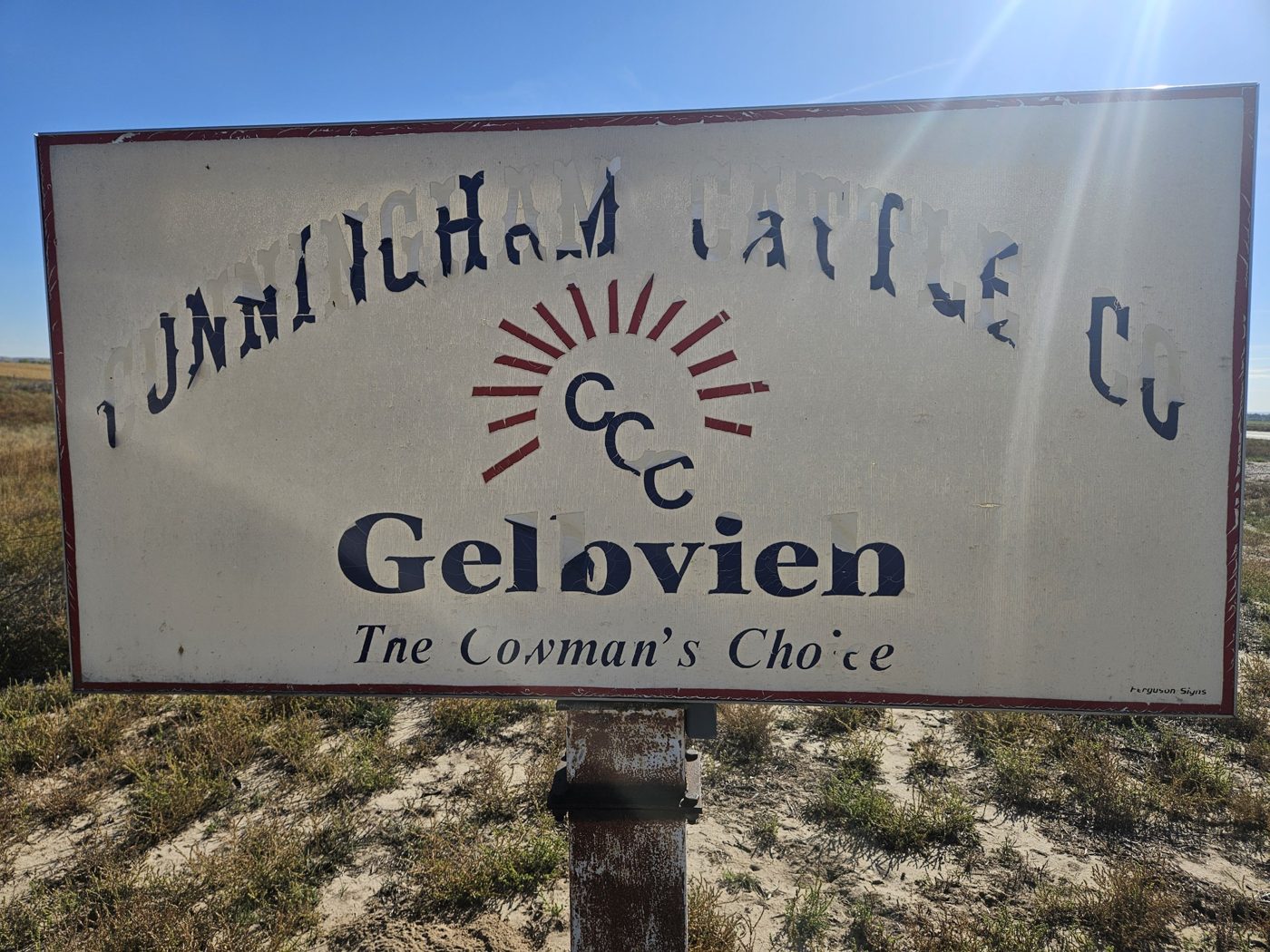
The company sold under a sunrise mark: three C's stepping down over the horizon, the sun coming up over the valley. The same mark shows on a "Gelbvieh Gold" private-reserve bottle the family still has, and on a red, white and navy Gelbvieh sign that reads "The Cowman's Choice."
The registered Gelbvieh herd carried on into the 2000s. The next generation showed cattle, sold bulls, helped host sales on the ranch and took the family's cattle to the National Western Stock Show in Denver.
Back together
Over the years the ranch came to run under several family business names. Now we're bringing it back together under the name it sold cattle under in the 1980s. Our first calves arrive in spring 2027, and our first beef is planned for 2028. Beef for your table is the new part. The land, the family and the cattle carry on with it.
What we don't know yet: the year ZT filed his homestead, and the exact parcel. We're working through county land records and family papers. If you have photos or stories of the McManis or Cunningham families, we'd love to hear from you.